Table of contents
Open Table of contents
I Have Been Hopping for a Long Time…
Am I addicted to DistroWatch? Maybe, or maybe not. But for sure I have been messing around with Linux distributions for a very long time.
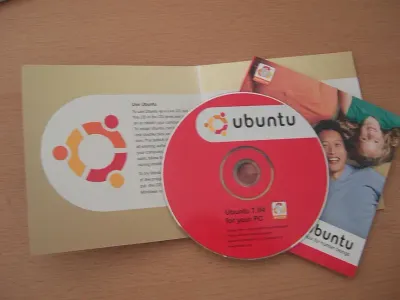
I started, like many people, with Ubuntu. In fact, I still keep some of the old physical Ubuntu disks I got back in the Ubuntu 7 days. They are my treasure! (Not my picture, though).
After that, I spent a long time on Arch Linux. That was probably the period when I got the most obsessed with tweaking everything. I was very deep into the whole ricing rabbit hole. And even I still keep some of those old dotfiles, even if I do not use them anymore.
At work I also spent around four years using Manjaro Linux, which at the time felt like a practical middle ground. And it wasn’t even my choice, which is surprising but great. After that I moved to Fedora, which I also enjoyed a lot. Fedora always felt more polished to me, especially when I wanted a modern Linux desktop without having to think too much about every package.
And now, as I get older, I keep orbiting around tiling setups in general. I still like i3, I have spent time with Hyprland, and lately I have been especially interested in Niri.
Linux in 2026: Trends I See Today
If we talk about the Linux desktop in 2026, I would say that the hyped thing is clearly Wayland, and inside that conversation Hyprland is usually the first name many people run into.
A lot of the current screenshots, shell projects, and desktop experiments assume a Wayland-first world, and in many cases a Hyprland-shaped one, even if we end up choosing something else later. You can just go to r/unixporn and see how many of the top posts are Hyprland setups.
And I also think there has been a small but very visible shift in how people talk about the desktop. For a long time, the default conversation was mostly about GNOME vs KDE Plasma (not you, Unity), maybe with Xfce around as the lighter option for old machines.
Now there is much more interest in compositors, shells, tiling workflows, and setups that feel more custom and less tied to the old DE model.
I know, I know, you are probably thinking…
What In The Hell All These Names Mean?
When people talk about their setup, it is easy to mix together the compositor, the shell, and the distro. These projects live at different layers, so it helps to separate them:
Distro base
  └── Arch / Fedora / NixOS / Ubuntu / etc.
        ├── Traditional DEs
        │     ├── GNOME
        │     ├── KDE Plasma
        │     ├── Xfce
        │     ├── Cinnamon
        │     └── MATE / Budgie / COSMIC
        └── Wayland compositor
              ├── Hyprland
              └── Niri
                    └── Shell / UI on top
                          ├── Noctalia
                          └── DankMaterialShell / DankLinux suite
                                └── Configs, widgets, launcher, bar, lockscreen...
It is not a perfect diagram, but it is a useful mental model. It explains why two people can both say they use Arch Linux and still have completely different desktop experiences, or why someone can move from Hyprland to Niri without changing distro at all.
Taking my current setup as an example, I am using Niri as the compositor, but I am using DankMaterialShell as the shell on top of it. I am not using Hyprland at all (although I did in the past), but I am still in the Wayland ecosystem. And I am not using a traditional DE like GNOME or KDE Plasma, but I am still using a Linux distro as the base.
Finally, Omarchy, which is super super popular right now, is a broader distro-level experience created by DHH that currently centers a Hyprland-based setup.
That distinction matters because saying “I use Hyprland” is not the same as saying “I use Omarchy”, and it is not the same as saying “I use Niri with Dank Linux”.
My Current Setup: Niri + Dank Linux
Like I said, right now, the setup I am actually using is Niri + Dank Linux, or more precisely Niri + DankMaterialShell.
Why Niri Clicked for Me
I understand why Hyprland is so popular, really, I used it for a long time, but what made me stay with Niri is that its core workflow feels calmer and more predictable to me.
The idea of scrollable tiling is not just a feature, it is the whole point. Instead of constantly resizing old windows to make room for new ones, windows are placed in a horizontal strip and I move across them. That sounds small on paper, but in practice it changes a lot.
On Top of Niri, Dank Linux
And on top of Niri I am using DankMaterialShell, which is part of the broader Dank Linux ecosystem. That shell gives me a lot of the pieces I want without forcing me to assemble them myself. Old me ricing Carlos would be disappointed by that, but current me is very happy to have a solid default experience that I can tweak with small plugins instead of having to build everything from scratch.
So, to summarize the stack I am using:
- Niri, which handles the compositor and the tiling model.
- DankMaterialShell, which handles the desktop shell around it: bars, launchers, panels, notifications, lock screen, and the other parts we used to glue together manually.
The Alternatives
One shell that I wanted to try but I have not yet is Noctalia. It is a shell that like DankMaterialShell, sits on top of Niri, but it has a different design and workflow. I am curious about it, but I have not had the time to test it yet.
On the other hand, Omarchy is interesting for a different reason. It is less about “choose your compositor and shell separately” and more about accepting an opinionated full-system experience. That is attractive when we want something cohesive quickly, but I still enjoy mixing pieces myself at some degree.