Table of contents
Open Table of contents
Why this book is useful
If you know me you know that I am a vivid reader, specially fantasy novels.
But since my current work allows me to buy books with a learning budget, I also have a few technical books that I like to read from time to time. I think I have almost all the classic technical books: clean code, python manuals, framework documentation, and so on. But I thought that I could write about something different, because not everything has to be about the software.
Sometimes, it is about the hardware!
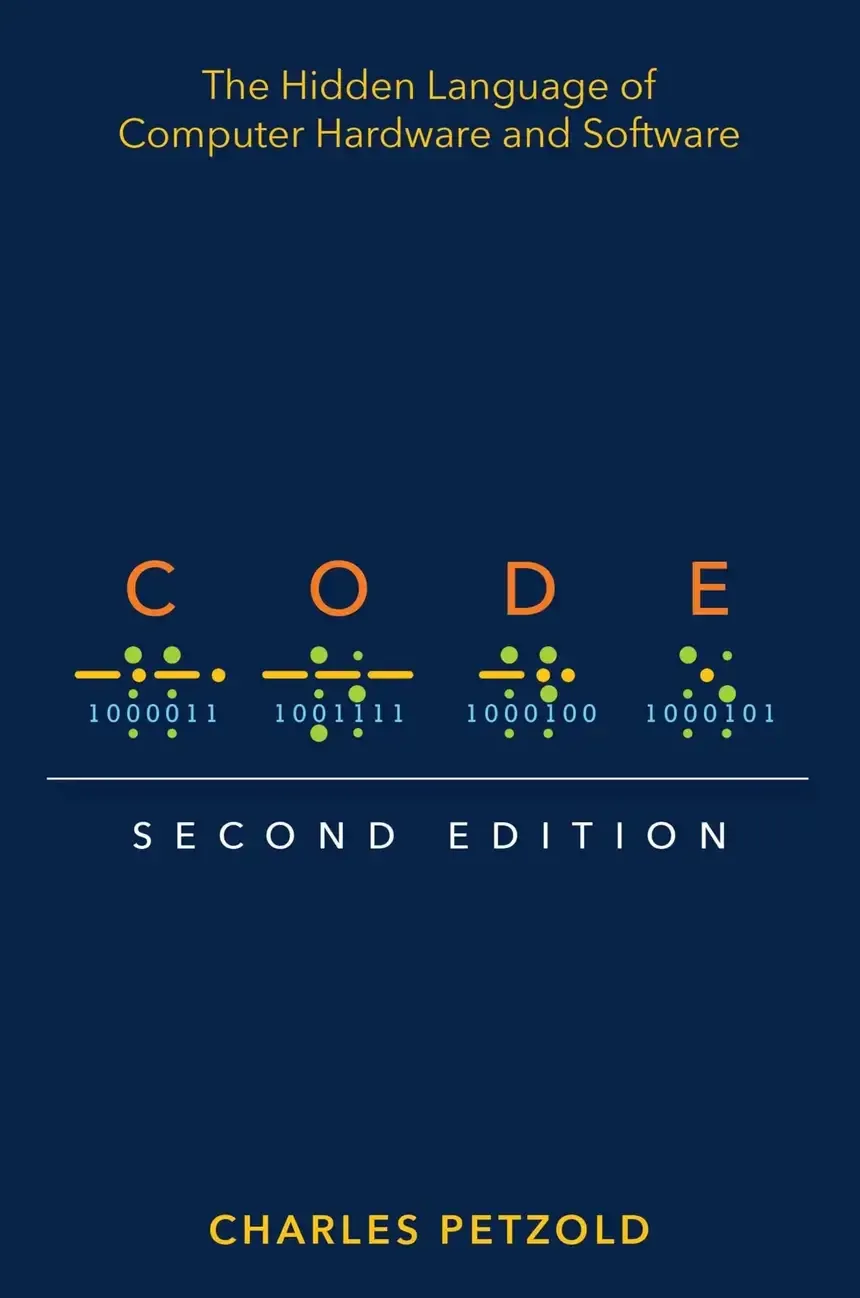
The book I want to talk about is Code: The Hidden Language of Computer Hardware and Software, by Charles Petzold. This book starts with very simple ideas, like signals, switches, binary numbers, and relays. Then it goes step by step until we can understand how computers work.
For me the best part the best part of this book is that it does not treat the computer like magic. It explains how small and simple pieces can become something useful when we put them together in the correct way.
In my case, this also connects with my background. I studied Industrial Engineering, and during that time I also studied a little bit of computer science and electronics. Not enough to say that I am very into hardware, but enough to make me curious about how all these parts work together.
The useful mental model
Most of the day I am working with Python, APIs, databases, containers, and infrastructure. That is fine and it is practical, but it also means that many layers are invisible for me, specially the hardware layers.
And this book helps me to see some of those layers again. It does not make me a hardware engineer, and that is not my objective. But it helps me connect ideas that we use many times without thinking too much.
Even today, when I have doubts about hardware, I usually ask for help to a friend who is very into that world (Hello there, Alberto!).
Do I recommend this book?
Absolutely!
I would recommend this book to anyone interested in understanding how computers work at a fundamental level.
I would not read Code looking for direct advice to write better backend services. It is not that kind of book.
But I think it is very useful if we want to understand the stack from a lower level. It also helps to remember that the abstractions we use every day are built on top of other smaller abstractions.